

Rim/wheel components can become damaged. Check all metal surfaces for rust or corrosion buildup, cracks in metal, bent flanges and side rings, and deep rim tool marks on rings or in gutter areas. Watch for the problems illustrated on the following page and take corrective actions to prevent further issues. Remember, assembling cracked, bent, severely corroded, or sprung rim/wheel components is dangerous. Such items should be destroyed and discarded.
RIM BASE CRACKS
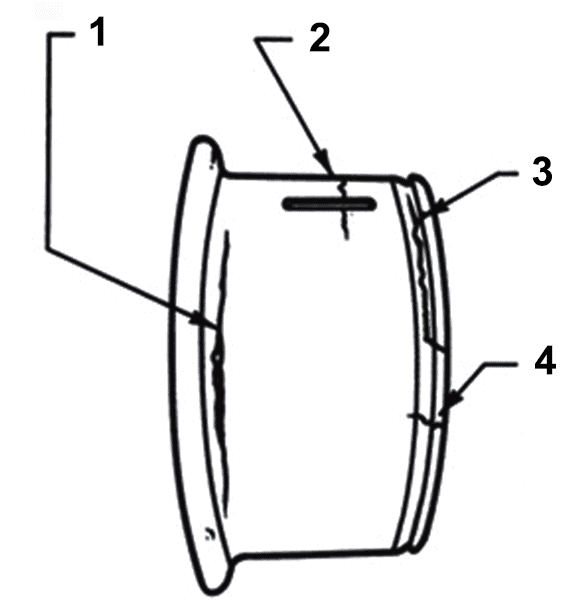
- Circumferential crack at back flange radius or bead seat.
Causes: Overload and/or overinflation, damage from tire tools, deep pitting, corrosion, and tire abrasion. - Circumferential cracks in the middle of the rim.
Causes: Overload, overinflation. - Cracks in the rim gutter.
Causes: Overinflation, hammer damage, improper cleaning, butt weld projection, or wrong rings. - Cracks across mounting bevel in a demountable rim.
Causes: Excessive clamping torque or improper components.
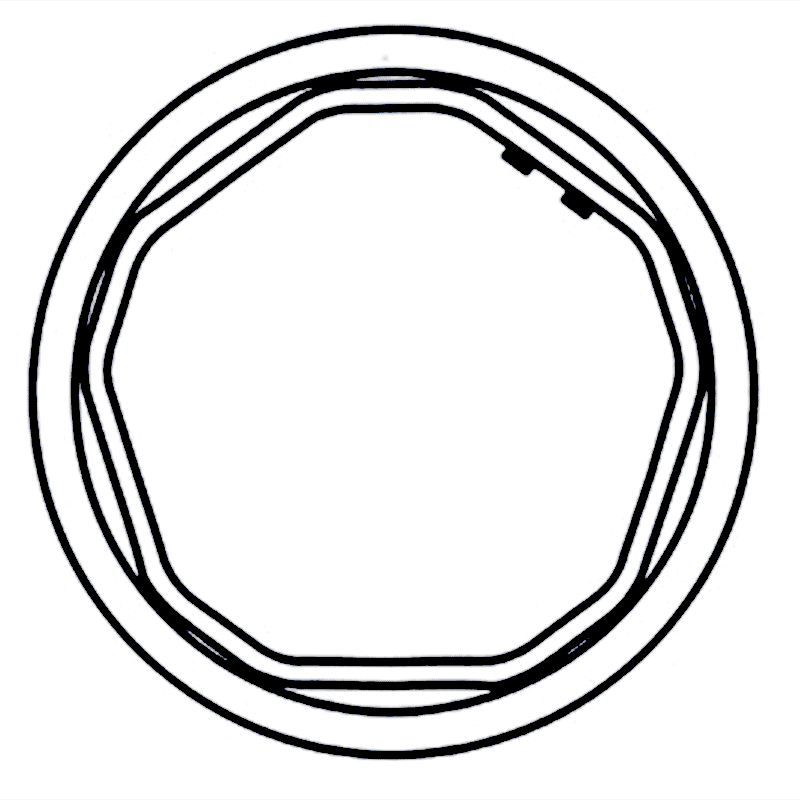
Flange or rim gutter chorded or bent.
Causes: Excessive or improper torque, wrong hub or clamp, severe impact, run flat or hammering on rim gutter.
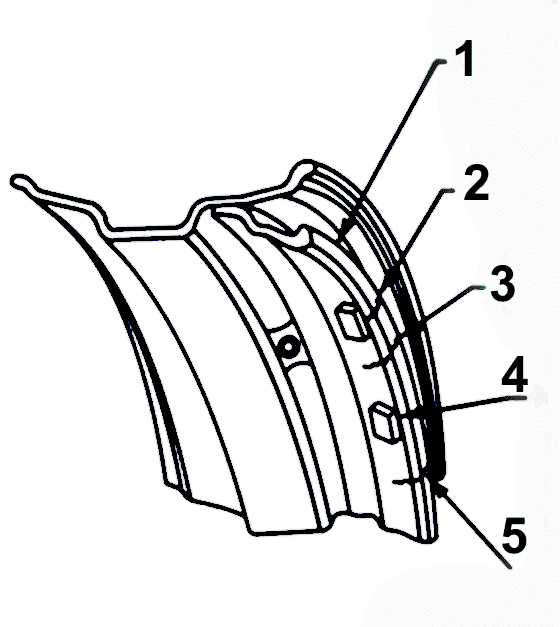
- Mounting ring chorded or bent.
Causes: Excessive or improper torque, wrong hub or clamp, severe impact. - Crack at valve locator.
Cause: Overload. - Crack between valve locators.
Cause: Overload. - Sheared or distorted valve locator.
Causes: Insufficient torque, damaged stud thread, improper clamp wedge length, or improper components. - Lateral crack at spoke or clamp fit.
Causes: Excessive or improper torque, wrong hub or clamp.
DISC WHEEL CRACKS/BOLT HOLE DISTORTION
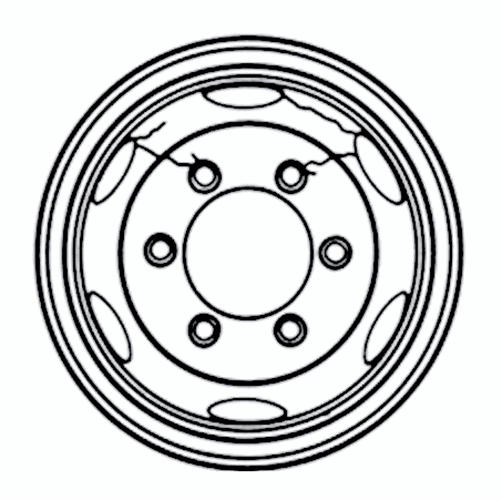
- Hand-hole to hand-hole.
- Hand-hole to bolt-hole.
- Hand-hole to the rim.
- Cause: Overloading.
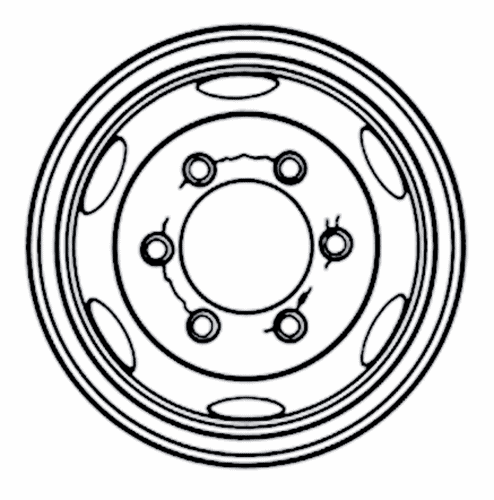
Bolt-hole to bolt-hole
Causes: Loose cap nuts, small hub backup (also see bolthole cracks/distortions).
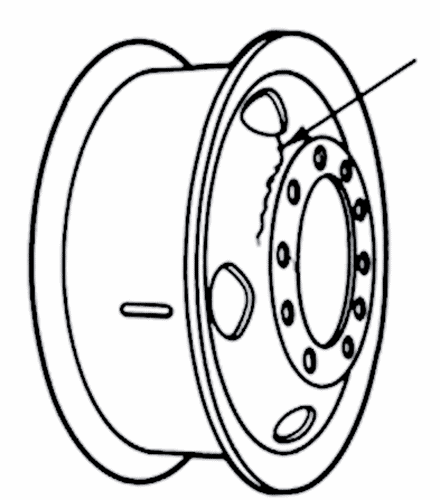
Cracks at disc nave and/or hand-hole.
Causes: Bad fit-up, damaged hub, overload or sharp edge at hand-hole.
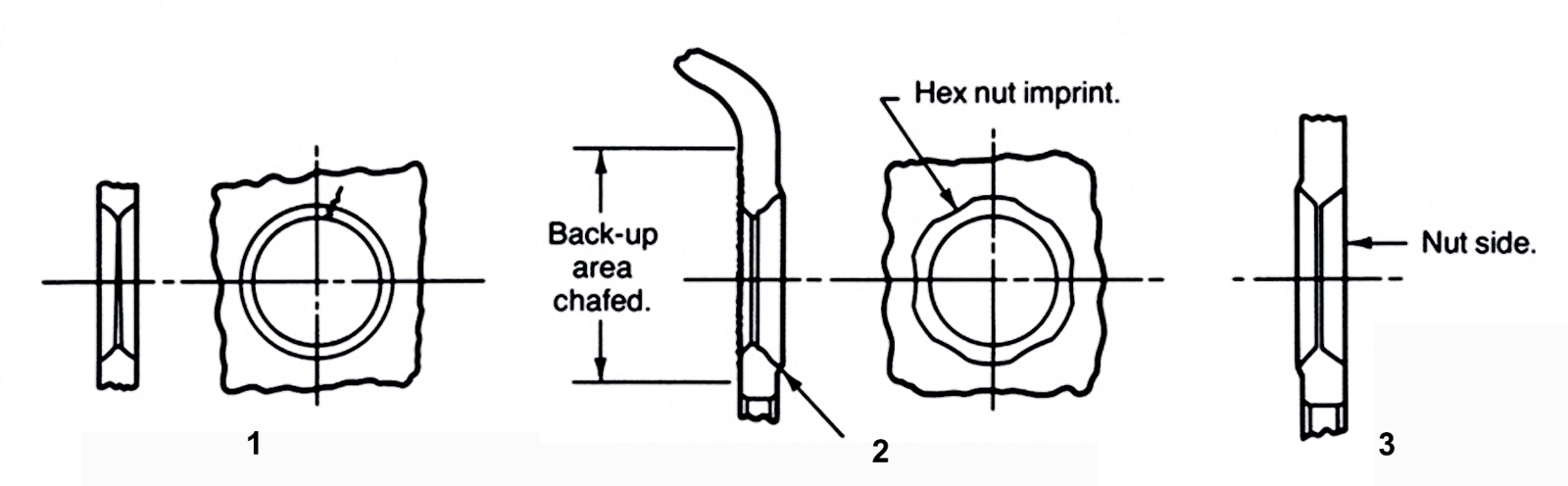
- Crack originating from thin edge of stud hole.
Cause: Damaged or worn-out at chamfers. - Chamfer enlarged or wallowed out by nut.
Causes: Loose cap nuts or insufficient nut torque due to damaged threads, improper torquing or by worn-out nut. - Chamfer extruded on side opposite nut.
Causes: Too much torque or improper nut.
TUBELESS RIM LEAKS
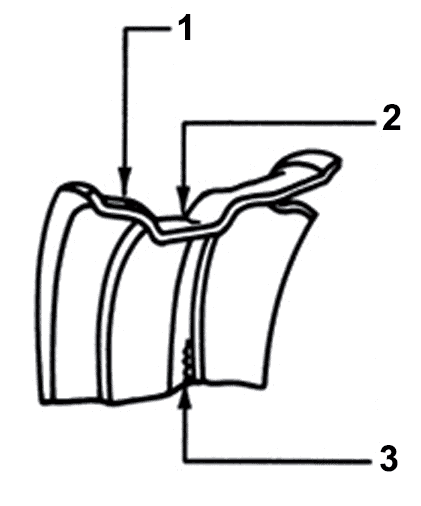
- Circumferential cracks at bead seat.
Causes: Moisture, pitting, and erosion by the tirebead. - Circumferential cracks in well radius.
Causes: Overload or overinflation. Corrosion due to water from the airlines, improper mounting lubricant, balance or sealer. - Circumferential cracks at attachment weld.
Causes: Overload, overinflation or loose mounting on the vehicle.
Note: Wheels with well-welded discs may not be approved for use with radial tires.
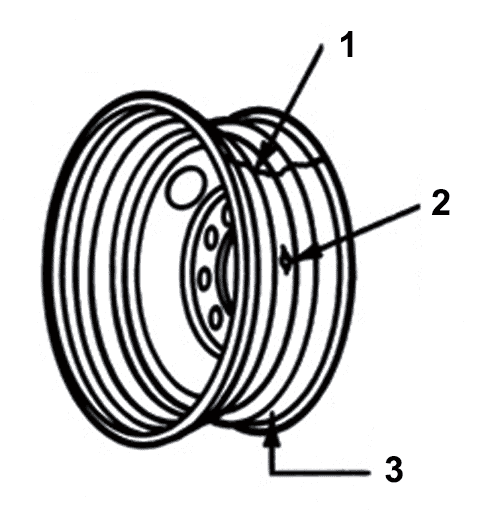
- Leak at the butt weld.
Cause: Overload. - Leak at the valve hole.
Causes: Damage or severe corrosion. - Leak under tire bead, groove or ridge across bead seat.
Causes: Corrosion, tire tool marks, bent flange or other damage.